Introduction
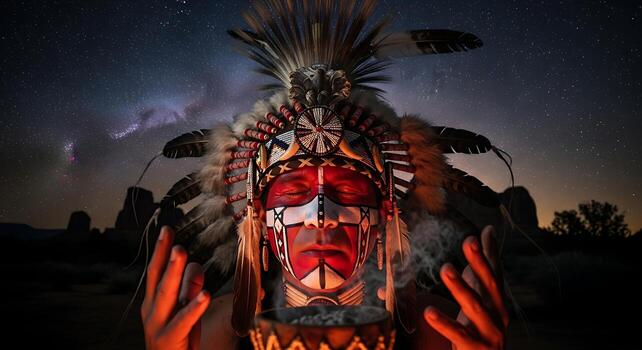
The phrase “Red Indian” is an outdated term historically used by some people to describe the Indigenous peoples of North America. Today, “Native American” or “Indigenous peoples” is generally more respectful and appropriate. They are also not a single culture but many distinct nations and communities with their own languages, traditions, and histories.
By contrast, Indian culture usually refers to the diverse cultures of the people of India, a South Asian country. Although these two groups are sometimes confused because of the similar terminology, they have completely different historical and cultural backgrounds.
1. Historical Background
Native American peoples have lived in North America for thousands of years, long before European colonization. They developed hundreds of distinct societies, languages, belief systems, and traditions.
The people of India have an equally long and complex history, shaped by ancient civilizations, kingdoms, religions, regional cultures, trade, migration, and colonialism. Modern India is home to many linguistic, religious, and ethnic communities.
Therefore, comparing the two as if each were one uniform culture can be misleading. Both contain enormous internal diversity.
2. Family and Community
Family and community are important in many Indian societies. Extended families have traditionally played a significant role, although urbanization and modernization have increased the popularity of nuclear families.
Native American communities have also historically placed strong importance on family, community, elders, and relationships with the wider group. However, practices differ considerably between Indigenous nations.
In both cases, community identity and respect for older generations can be important cultural values, although they are expressed through different traditions.
3. Relationship With Nature
One major theme found in many Indigenous North American traditions is a strong spiritual and cultural relationship with the natural world. Land, animals, plants, water, and ancestors may hold deep significance.
Indian traditions also contain many philosophies and religious practices emphasizing relationships between humans, nature, and the wider universe. Concepts such as ahimsa (non-violence), reverence for certain animals, and traditions connected with rivers, forests, mountains, and other natural features can be found in different Indian communities.
However, neither group has one single attitude toward nature. Beliefs vary considerably among individual communities.
4. Religion and Spirituality
India is home to several major religions, including Hinduism, Islam, Christianity, Sikhism, Buddhism, and Jainism, as well as many regional and Indigenous belief systems.
Native American spirituality is similarly diverse. Different Indigenous nations have their own ceremonies, stories, sacred places, spiritual traditions, and understandings of the world.
One important difference is that Indian religious traditions have developed large philosophical and institutional traditions that continue to shape everyday life across the country, while Indigenous North American spiritual traditions are often closely connected to particular nations, communities, ancestral lands, and oral traditions.
5. Food and Lifestyle
Indian cuisine is famous for its regional diversity. Rice, wheat, lentils, vegetables, spices, dairy products, seafood, and meat all feature prominently in different parts of India. Food traditions can also be influenced by religion and local history.
Traditional Indigenous North American diets varied greatly depending on geography. Different communities relied on locally available foods such as corn, beans, squash, wild game, fish, berries, roots, and other plants.
Modern lifestyles have changed food habits in both populations, but traditional foods continue to play an important role in cultural identity.
6. Clothing and Art
Traditional Indian clothing includes garments such as sarees, salwar kameez, dhotis, kurtas, turbans, and many region-specific styles. Indian art includes painting, sculpture, textiles, embroidery, dance, music, and crafts.
Indigenous North American peoples have their own rich traditions of clothing, beadwork, weaving, carving, pottery, painting, music, dance, and storytelling. Designs and clothing styles vary from nation to nation.
It is important not to treat either group as having one universal traditional style.
7. Modern Culture
Modern Indians live in a society influenced by both ancient traditions and contemporary global culture. Cities such as Mumbai, Delhi, Bengaluru, and Hyderabad combine traditional customs with technology, international business, modern entertainment, and changing social attitudes.
Native American people today also live contemporary lives. Indigenous communities participate in modern education, business, politics, technology, arts, sports, and popular culture while many continue to preserve their languages, ceremonies, and cultural traditions.
This is an important point: traditional culture and modern life are not opposites. A person can participate fully in modern society while maintaining a strong connection to ancestral culture.
Conclusion
Native American cultures and Indian cultures developed in very different historical and geographical environments. Yet both demonstrate how communities can preserve traditions while adapting to a changing world.
Rather than viewing one as “old” and the other as “modern,” it is more accurate to recognize that both Native American peoples and the people of India have ancient cultural histories that continue to evolve today.
Understanding these differences also reminds us that neither group is culturally uniform. There are hundreds of Indigenous nations in North America and enormous regional, linguistic, religious, and cultural diversity within India.
Respectful comparison is therefore not about deciding which culture is better—it is about learning how different societies developed their own ways of understanding family, community, spirituality, nature, art, food, and modern life.
Leave a Reply