Author: admin

  • WordPress CRM in 2026: Global Platforms vs. Bangladesh-Made Solutions

    WordPress has grown far beyond a simple blogging platform. Today, businesses use WordPress to manage websites, e-commerce stores, memberships, subscriptions, customer support, and increasingly, customer relationships.

    This has created an important question for WordPress businesses and developers: Should you connect WordPress with an established global CRM, or use a CRM built specifically for the WordPress ecosystem in Bangladesh?

    The answer depends on business size, budget, integrations, localization, and the level of customization required.

    What CRM Means in the WordPress Community

    A Customer Relationship Management (CRM) system helps businesses organize customer information, leads, communication, sales activities, support requests, and follow-ups.

    In the WordPress community, CRM functionality is commonly provided through plugins or integrations. Popular approaches include WordPress-native CRM plugins as well as integrations with major platforms such as HubSpot, Salesforce, Zoho CRM, and Microsoft Dynamics.

    These solutions can connect customer information from WordPress forms, WooCommerce, membership systems, email marketing platforms, and other business tools.

    Why Global CRMs Remain Popular

    Large international CRM platforms have several advantages.

    1. Mature Features

    Established CRM companies typically provide sophisticated features such as:

    • Contact and lead management
    • Sales pipelines
    • Marketing automation
    • Email tracking
    • Customer segmentation
    • Reporting and analytics
    • Workflow automation
    • Mobile applications
    • Third-party integrations

    For medium and large companies, this depth can be extremely valuable.

    2. Large Integration Ecosystems

    Global CRMs often integrate with hundreds or thousands of other business applications. This makes them attractive to companies that already use multiple SaaS platforms.

    3. Proven Scalability

    A growing company may start with a small number of customers and eventually manage thousands or millions of records. Established CRM platforms are designed to support that growth.

    The Opportunity for Bangladesh-Made WordPress CRM

    Bangladesh has a rapidly growing WordPress development community, with freelancers, agencies, plugin developers, WooCommerce specialists, and software companies serving both local and international customers.

    This creates an opportunity for Bangladesh-made CRM solutions built specifically around WordPress and WooCommerce.

    Instead of trying to reproduce every feature offered by a global enterprise CRM, a local WordPress CRM can focus on practical requirements:

    • Simple installation
    • WordPress-native user experience
    • WooCommerce customer management
    • Lead management
    • Local business workflows
    • Affordable pricing
    • Custom development
    • Bangladesh-focused customer support
    • Localization and local business requirements

    Global CRM vs. Bangladesh-Made WordPress CRM

    AreaGlobal CRMBangladesh-Made WordPress CRM
    Feature depthUsually very highCan focus on essential features
    WordPress integrationOften through plugins/connectorsCan be deeply WordPress-native
    WooCommerce integrationAvailable depending on platformCan be designed around WooCommerce
    PricingOften subscription-basedPotentially more affordable
    CustomizationUsually available on higher plansCan offer direct customization
    Local supportInternational supportPotential for local support
    Bangladesh-specific needsMay require customizationCan be designed for local workflows
    Enterprise capabilitiesStrongDepends on the product
    Ease of deploymentVariesCan be optimized for WordPress users

    Why WordPress-Native CRM Matters

    One of the biggest advantages of a WordPress-native CRM is simplicity.

    A small business may not need a complex enterprise CRM. It may simply need to know:

    Who is the customer? What did they purchase? What did they ask about? Who needs a follow-up? What is the next step?

    If this information can be managed directly inside the WordPress dashboard, businesses may avoid the complexity of maintaining multiple systems.

    For WooCommerce stores, the opportunity is even greater. Customer data, orders, products, subscriptions, and website activity already exist inside WordPress. A CRM can build on this information rather than forcing businesses to move everything to another platform.

    The Bangladesh Market Has Different Priorities

    A CRM designed for Bangladeshi businesses can consider requirements that international platforms may not prioritize.

    For example, local businesses may value:

    • Bangla-language interfaces
    • BDT currency support
    • Local payment workflows
    • Mobile-first business operations
    • WhatsApp and other communication workflows
    • Local sales processes
    • Small-business pricing
    • Local technical support
    • Custom reports and integrations

    This does not mean a Bangladesh-made CRM should only target Bangladesh. In fact, a WordPress CRM built in Bangladesh could potentially serve international WordPress users while using local knowledge as a competitive advantage.

    Where Global CRMs Still Win

    It would be unrealistic to suggest that a new local CRM automatically replaces established platforms.

    Global CRM platforms generally have a significant advantage in enterprise functionality, documentation, integrations, security infrastructure, international support, analytics, and years of product development.

    A company with a large sales organization and complex automation requirements may be better served by an established enterprise CRM.

    The goal for a Bangladesh-made WordPress CRM should therefore not necessarily be “replace every CRM.”

    A better goal is:

    Build the best CRM experience for businesses that already depend on WordPress.

    A Possible Future for Bangladesh-Made WordPress CRM

    Bangladesh has already demonstrated that its developers can build WordPress themes, plugins, WooCommerce extensions, SaaS products, and digital services for international markets.

    The next opportunity is to move further up the technology value chain.

    A Bangladesh-made WordPress CRM could combine:

    WordPress + WooCommerce + CRM + Automation + Local Business Needs

    into a single product.

    If developed with a strong focus on performance, security, user experience, documentation, APIs, integrations, and internationalization, such a product could potentially compete beyond Bangladesh.

    Conclusion

    The current WordPress CRM landscape offers two broad choices.

    Global CRM platforms provide mature ecosystems, extensive integrations, and advanced enterprise capabilities. Bangladesh-made WordPress CRM solutions can take a different approach by focusing on simplicity, affordability, WordPress-native functionality, WooCommerce integration, customization, and local business requirements.

    For a large enterprise, a global CRM may remain the better choice.

    For a WordPress-based small or medium business, however, a focused WordPress-native CRM could provide a more practical experience.

    The real opportunity for Bangladesh is not simply to create another CRM.

    It is to create a CRM that understands how WordPress businesses actually work—and then make that solution good enough to serve customers around the world.
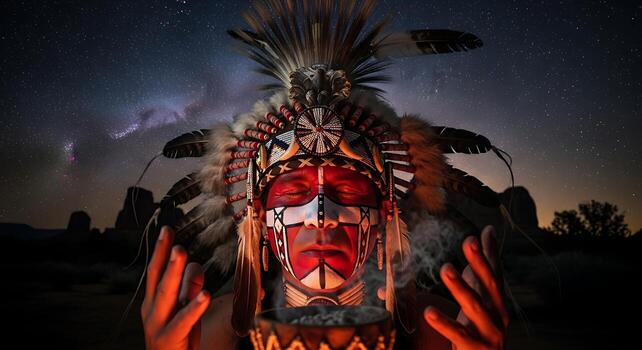

  • Red Indian vs. Modern Indian Culture: Understanding the Difference

    Red Indian vs. Modern Indian Culture: Understanding the Difference

    Introduction

    The phrase “Red Indian” is an outdated term historically used by some people to describe the Indigenous peoples of North America. Today, “Native American” or “Indigenous peoples” is generally more respectful and appropriate. They are also not a single culture but many distinct nations and communities with their own languages, traditions, and histories.

    By contrast, Indian culture usually refers to the diverse cultures of the people of India, a South Asian country. Although these two groups are sometimes confused because of the similar terminology, they have completely different historical and cultural backgrounds.

    1. Historical Background

    Native American peoples have lived in North America for thousands of years, long before European colonization. They developed hundreds of distinct societies, languages, belief systems, and traditions.

    The people of India have an equally long and complex history, shaped by ancient civilizations, kingdoms, religions, regional cultures, trade, migration, and colonialism. Modern India is home to many linguistic, religious, and ethnic communities.

    Therefore, comparing the two as if each were one uniform culture can be misleading. Both contain enormous internal diversity.

    2. Family and Community

    Family and community are important in many Indian societies. Extended families have traditionally played a significant role, although urbanization and modernization have increased the popularity of nuclear families.

    Native American communities have also historically placed strong importance on family, community, elders, and relationships with the wider group. However, practices differ considerably between Indigenous nations.

    In both cases, community identity and respect for older generations can be important cultural values, although they are expressed through different traditions.

    3. Relationship With Nature

    One major theme found in many Indigenous North American traditions is a strong spiritual and cultural relationship with the natural world. Land, animals, plants, water, and ancestors may hold deep significance.

    Indian traditions also contain many philosophies and religious practices emphasizing relationships between humans, nature, and the wider universe. Concepts such as ahimsa (non-violence), reverence for certain animals, and traditions connected with rivers, forests, mountains, and other natural features can be found in different Indian communities.

    However, neither group has one single attitude toward nature. Beliefs vary considerably among individual communities.

    4. Religion and Spirituality

    India is home to several major religions, including Hinduism, Islam, Christianity, Sikhism, Buddhism, and Jainism, as well as many regional and Indigenous belief systems.

    Native American spirituality is similarly diverse. Different Indigenous nations have their own ceremonies, stories, sacred places, spiritual traditions, and understandings of the world.

    One important difference is that Indian religious traditions have developed large philosophical and institutional traditions that continue to shape everyday life across the country, while Indigenous North American spiritual traditions are often closely connected to particular nations, communities, ancestral lands, and oral traditions.

    5. Food and Lifestyle

    Indian cuisine is famous for its regional diversity. Rice, wheat, lentils, vegetables, spices, dairy products, seafood, and meat all feature prominently in different parts of India. Food traditions can also be influenced by religion and local history.

    Traditional Indigenous North American diets varied greatly depending on geography. Different communities relied on locally available foods such as corn, beans, squash, wild game, fish, berries, roots, and other plants.

    Modern lifestyles have changed food habits in both populations, but traditional foods continue to play an important role in cultural identity.

    6. Clothing and Art

    Traditional Indian clothing includes garments such as sarees, salwar kameez, dhotis, kurtas, turbans, and many region-specific styles. Indian art includes painting, sculpture, textiles, embroidery, dance, music, and crafts.

    Indigenous North American peoples have their own rich traditions of clothing, beadwork, weaving, carving, pottery, painting, music, dance, and storytelling. Designs and clothing styles vary from nation to nation.

    It is important not to treat either group as having one universal traditional style.

    7. Modern Culture

    Modern Indians live in a society influenced by both ancient traditions and contemporary global culture. Cities such as Mumbai, Delhi, Bengaluru, and Hyderabad combine traditional customs with technology, international business, modern entertainment, and changing social attitudes.

    Native American people today also live contemporary lives. Indigenous communities participate in modern education, business, politics, technology, arts, sports, and popular culture while many continue to preserve their languages, ceremonies, and cultural traditions.

    This is an important point: traditional culture and modern life are not opposites. A person can participate fully in modern society while maintaining a strong connection to ancestral culture.

    Conclusion

    Native American cultures and Indian cultures developed in very different historical and geographical environments. Yet both demonstrate how communities can preserve traditions while adapting to a changing world.

    Rather than viewing one as “old” and the other as “modern,” it is more accurate to recognize that both Native American peoples and the people of India have ancient cultural histories that continue to evolve today.

    Understanding these differences also reminds us that neither group is culturally uniform. There are hundreds of Indigenous nations in North America and enormous regional, linguistic, religious, and cultural diversity within India.

    Respectful comparison is therefore not about deciding which culture is better—it is about learning how different societies developed their own ways of understanding family, community, spirituality, nature, art, food, and modern life.

  • Big Brother Is Watching You: The Age of Constant Surveillance

    Big Brother Is Watching You: The Age of Constant Surveillance

    Have you ever wondered how much information about you is being watched, collected, or stored every day?

    The phrase “Big Brother is watching you” became famous through George Orwell’s 1984, where a powerful government constantly monitors its citizens. Today, the idea feels surprisingly relevant—not because we necessarily live under one giant surveillance system, but because cameras, smartphones, websites, apps, and social media can collect enormous amounts of information about our lives.

    Are We Really Being Watched?

    Walk down a city street and you may pass security cameras without noticing them. Use a smartphone and your location, searches, and online activity may generate data. Visit a website, and cookies and tracking technologies can help companies understand what you are interested in.

    This doesn’t always mean someone is personally sitting and watching you. Much of modern surveillance is automated. Algorithms collect and analyze information to identify patterns, predict behavior, personalize advertising, improve services, or maintain security.

    Convenience vs. Privacy

    Surveillance can have legitimate benefits. Security cameras can help investigate crimes, and digital monitoring can sometimes protect people from fraud or cyberattacks.

    But there is another side to the story.

    When people don’t know what information is being collected, who can access it, or how long it will be stored, privacy becomes a serious concern. The more data that is collected, the greater the potential consequences if that data is misused, leaked, or accessed without proper authorization.

    What Can We Do?

    We may not be able to disappear from the digital world, but we can become more aware of our digital footprints.

    Review the privacy settings on your accounts. Be careful about the information you share publicly. Use strong, unique passwords and enable two-factor authentication where possible. Most importantly, think before giving an app or website access to information it doesn’t really need.

    Final Thoughts

    “Big Brother is watching you” was once a warning from a fictional dystopian world. Today, it can serve as a reminder to think carefully about the balance between technology, security, convenience, and personal privacy.

    The real question isn’t simply whether someone is watching.

    It’s who is watching, what are they collecting, and what are they doing with it?

  • Bit Social Cron Test 1

    Bit Social Cron Test 1

    Baymax: The Healthcare Companion We All Wish We Had

    If you’ve watched Big Hero 6, chances are you remember Baymax—the lovable, inflatable healthcare companion who became one of Disney’s most memorable characters. With his gentle personality, simple design, and caring nature, Baymax is much more than a cute robot. He represents an inspiring vision of how technology can be used to help people.

    Who Is Baymax?

    Baymax is a healthcare robot created by Tadashi Hamada in Disney’s Big Hero 6. His primary purpose is to care for people and help them with their health and well-being.

    Unlike the typical robots we see in science fiction, Baymax isn’t designed to fight or dominate. Instead, he listens, checks symptoms, offers assistance, and tries to make people feel better. His calm personality makes him both funny and heartwarming.

    Why Baymax Is So Special

    One of Baymax’s greatest qualities is his compassion. He doesn’t judge people or become frustrated when they need help. His mission is simple: help those who are hurting.

    His famous question, “On a scale of 1 to 10, how would you rate your pain?” has become one of the most recognizable moments associated with the character.

    Baymax also shows that advanced technology doesn’t have to feel cold or complicated. A machine can be intelligent while still being designed around human needs.

    Baymax and Technology

    Baymax gives us an interesting glimpse into the future of healthcare. While a real robot like Baymax isn’t currently capable of doing everything he does in the movie, technologies such as artificial intelligence, wearable devices, and health-monitoring systems are already helping people manage their health.

    The idea behind Baymax is particularly interesting because it focuses on technology with empathy. Instead of replacing human care, technology could potentially support doctors, caregivers, and families by providing information and assistance when it is needed.

    A Character With a Big Message

    At the heart of Baymax is a simple message: taking care of people matters.

    His story reminds us that strength isn’t always about being powerful. Sometimes, the most important thing we can do is listen, help, and be there for someone who needs us.

    That is what makes Baymax such a memorable character. He may be a fictional robot, but the values he represents—kindness, friendship, compassion, and care—are very real.

    Final Thoughts

    Baymax is more than a character from Big Hero 6. He is a symbol of the positive possibilities of technology. His gentle nature and dedication to helping others have made him a favorite among audiences of all ages.

    Perhaps the biggest lesson Baymax teaches us is also the simplest: sometimes helping someone feel better is the most important thing you can do.

  • Hello world!

    Welcome to WordPress. This is your first post. Edit or delete it, then start writing!